
Here is the short answer: yes, quality EMF shielding paints and fabrics can reduce radio frequency (RF) levels, sometimes substantially, when they are matched to the right problem and installed correctly. The catch is in those two conditions. These products only address certain types of EMF, their real-world performance depends heavily on coverage and installation, and a partial or careless job can leave readings unchanged or even higher in the spots that matter.
So the practical question is not whether shielding materials work in a lab. It is whether a specific product, installed in your specific room, against your specific sources, produces a measurable improvement where you actually spend time. That is a question you answer with a meter, not a marketing page.
What do shielding paints and fabrics actually do?
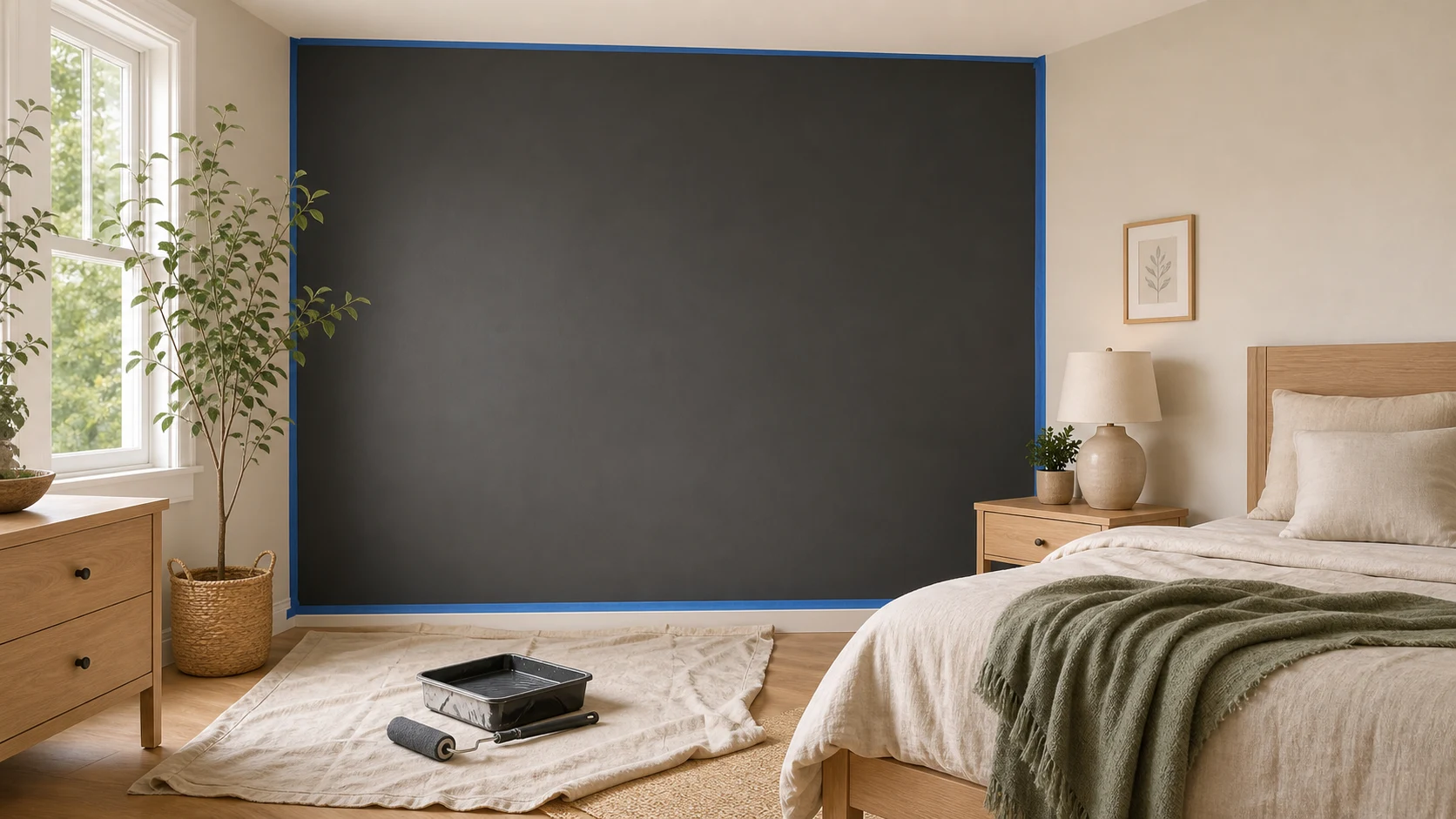
Shielding paints and fabrics are conductive materials. Shielding paint is usually a black carbon or graphite based coating that goes on like regular paint and is then covered with normal wall paint. Shielding fabrics weave conductive threads, often silver or copper, into a textile that can be hung as a curtain, sewn into a canopy, or laid as a liner.
When a radio frequency signal meets a conductive surface, much of the signal is reflected and some is absorbed. That is the same physics behind a Faraday cage. The result, when the material fully covers the path between a source and a space, is attenuation: the signal that gets through is weaker than the signal that arrived.
Notice the wording. Attenuation means reduction, not elimination. And the reduction only applies along the paths the material actually covers, at the frequencies the material handles well.
That one paragraph explains most shielding successes and most shielding disappointments.
Do EMF shielding paints work?
As a material, reputable conductive shielding paint does what it claims: lab tests on ideal, fully coated samples commonly show strong RF attenuation. As a home project, results vary much more, because a bedroom is not a lab sample.
A shielding paint project tends to go well when:
- The dominant source is outside the room, such as a nearby cell site, a neighbor’s router or smart meter on a shared wall, or other external transmitters.
- The painted surface fully covers the exposure path, including edges and corners, with the recommended number of coats.
- Windows and doors in the same wall are addressed some other way, because paint cannot cover glass.
- The painted surface is grounded according to the manufacturer’s instructions by someone qualified to do it.
- The room is measured before and after, so the result is known rather than assumed.
The grounding point deserves emphasis. Conductive paint manufacturers typically instruct that the coated surface be connected to the building’s earth or ground by a qualified electrician, using the grounding hardware made for the product. An ungrounded conductive surface sitting near household wiring can couple with the AC electric fields around it, which can raise electric field readings near the wall instead of lowering them. Grounding is not an optional accessory. It is part of the installation.
One more honest note: shielding paint is a renovation decision, not a gadget. It is permanent, it requires topcoats, and undoing it means repainting or worse. That is another reason to confirm the problem with measurement before the roller comes out.
Do shielding fabrics and canopies work?
Shielding fabrics follow the same physics with more flexibility and less commitment. A good conductive fabric can attenuate RF strongly in lab terms, and fabric has some real advantages: a renter can hang and remove it, a canopy can enclose a bed on more sides than a single painted wall, and a curtain can cover the glass that paint cannot.
The trade-offs are also real:
- Seams and openings leak. RF finds gaps. A canopy that hangs open, a curtain with a wide gap at the edges, or a fabric panel that covers only part of a window will pass signal around the shielded area.
- Enclosure matters. Shielding one side of a bed against a source that also reaches the room through the ceiling, floor, or another wall changes the numbers less than expected.
- Fabric performance varies widely. Conductive textiles differ in weave, materials, and durability, and washing or wear can degrade some products over time.
- Anything transmitting inside the canopy defeats the point. A phone on the nightstand inside a shielding canopy is now inside the shield with you. Worse, a phone in a weak-signal pocket can work harder to stay connected. The FCC makes a version of this point about phone shielding accessories: studies have shown such products generally do not work as advertised and can increase the phone’s transmit power by interfering with normal operation.
None of this makes fabric a bad option. It makes fabric an option that needs the same discipline as paint: identify the source, cover the actual paths, keep transmitters out of the shielded space, and measure the result.
Why does frequency matter so much?
EMF is not one thing, and shielding materials do not treat every field type the same way. In home consulting terms, there are four categories worth separating, and EMF Guru measures them as distinct issues: radio frequency fields, AC electric fields, AC magnetic fields, and dirty electricity. The Field Notes overview of the four types of EMF we measure in homes covers them in plain English.
For shielding products, the frequency question has a blunt practical answer:
- Radio frequency fields: This is what shielding paints and fabrics are designed for. Wi-Fi, cellular, Bluetooth, smart meters, and similar wireless signals fall here.
- AC electric fields: Grounded conductive surfaces can reduce these. Ungrounded ones can make them worse near the surface.
- AC magnetic fields: Standard shielding paints and fabrics do not meaningfully block the low frequency magnetic fields that come from building wiring, electrical panels, or appliances. Mitigating those fields is a different discipline involving distance, wiring corrections, or specialized materials, and it starts with finding the cause.
- Dirty electricity: A wall coating does not address noise riding on the electrical wiring itself.
This is one of the most common and expensive mismatches we see in the field: a homeowner paints a bedroom wall because of a reading that was actually an AC magnetic field from a panel or a wiring error. The paint performs exactly as designed and the number that worried them does not move, because the paint was never the right tool for that field type.
What are the most common failure modes?
When a shielding project disappoints, the cause is usually one of a handful of repeat offenders:
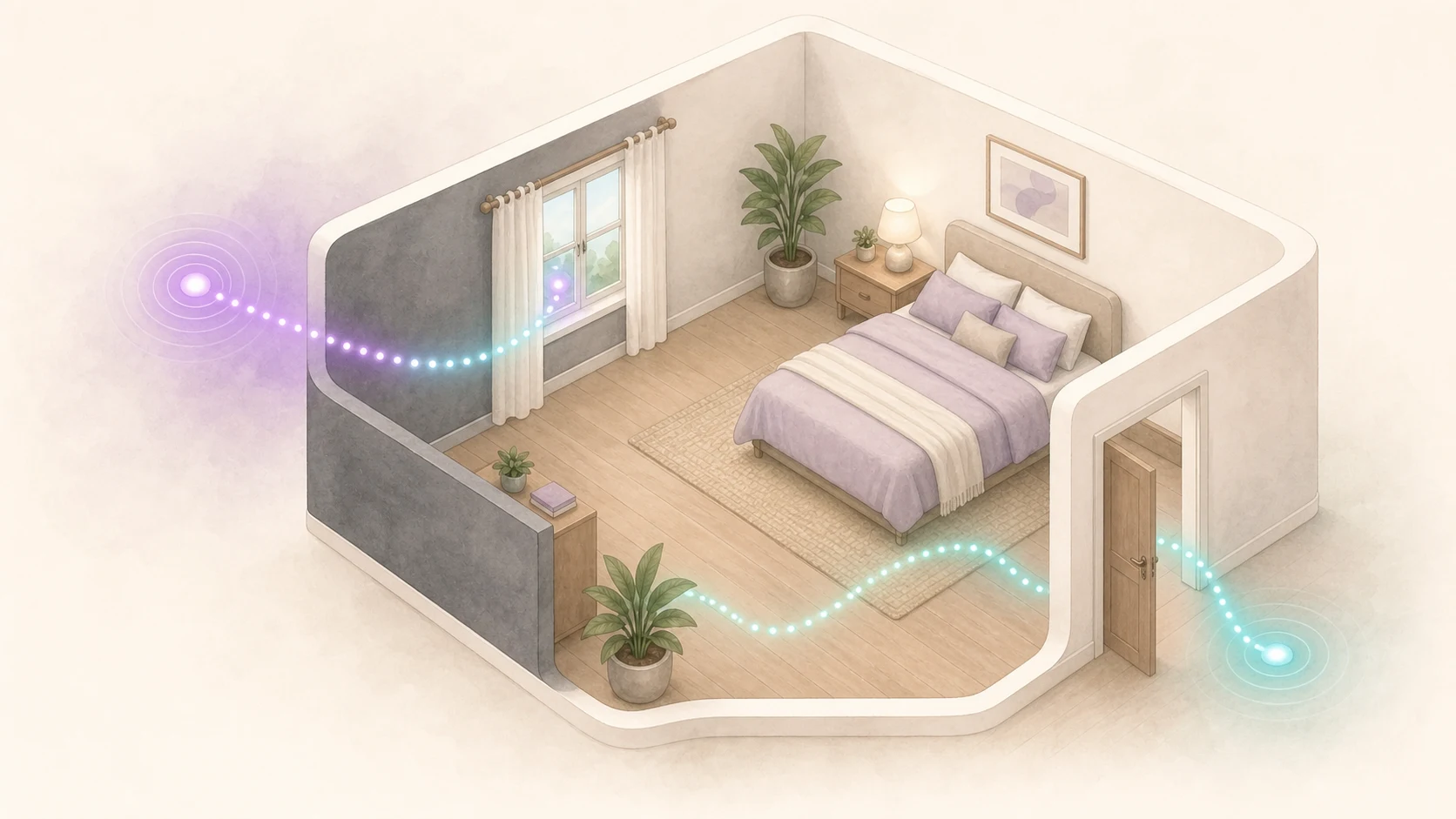
- Windows and doors were ignored. Glass passes RF readily, and a shielded wall with an unshielded window is a wall with a hole in it. Window film, shielding curtains, or layout changes have to be part of the plan.
- Partial coverage. Signals arrive from more directions than people expect, including through the roof, the floor, and adjacent rooms. Shielding one wall against a source that wraps around it produces small numbers on the meter and large frustration.
- No grounding. Conductive paint left ungrounded, or grounded improperly, can raise electric field readings near the wall. Follow the manufacturer’s instructions and use a qualified electrician.
- Reflection surprises. Conductive surfaces reflect RF. If the strongest transmitters are inside the home, a shielded wall can bounce some of their signal back into the living space instead of letting it pass through. Shielding a room that contains its own active router is working against yourself.
- Devices working harder inside shielded spaces. A phone, tablet, or hotspot inside a well-shielded room may increase its transmit power trying to hold a weak connection. If wireless devices must be used in that room, the shielding plan has to account for it, or the devices should go to airplane mode or stay outside.
- The wrong field type. As above: paint and fabric are RF tools. They are not magnetic field tools.
Every one of these failure modes is detectable, and most are preventable, with measurement and planning. None of them are visible on a product page.
How can you tell if a shielding product is worth it?
Use the same standard EMF Guru applies to smart meter covers in our comparison of smart meter opt-out fees and measurable shielding: a shielding product is worth it when it produces a measurable, meaningful reduction in the places you actually spend time, at a cost that beats the alternatives.
That standard implies a few tests you can apply before spending money:
- Is the source identified? A reading is not a source. Knowing that the level in the bedroom is elevated is different from knowing it comes from a specific tower direction, a neighbor’s equipment, or your own devices. Measurement beats guessing here.
- Is there a cheaper fix upstream? Moving a router, hardwiring a device, changing a bed position, or turning transmitters off at night costs little and often accomplishes more than materials. Shielding is what you consider after the free and easy steps are done.
- Can the product cover the real path? If the exposure path includes windows, multiple walls, or the ceiling, a single shielded surface will underdeliver. Price the honest version of the project, not the hopeful version.
- Does the seller talk about measurement and installation? Reputable shielding suppliers publish attenuation data, specify grounding hardware, and tell you results depend on installation. Safe Living Technologies and Less EMF, the shielding suppliers we list on our EMF products page, both meet that standard. Be cautious with any product that promises health outcomes, uses fear-first marketing, or claims one sticker, pendant, or small panel protects a whole room. For context on why official limits and precaution-based guidance differ, see FCC limits vs precautionary guidelines.
- Will you verify the result? If the answer is no, reconsider the purchase. An unverified shielding project is a hope, not a mitigation.
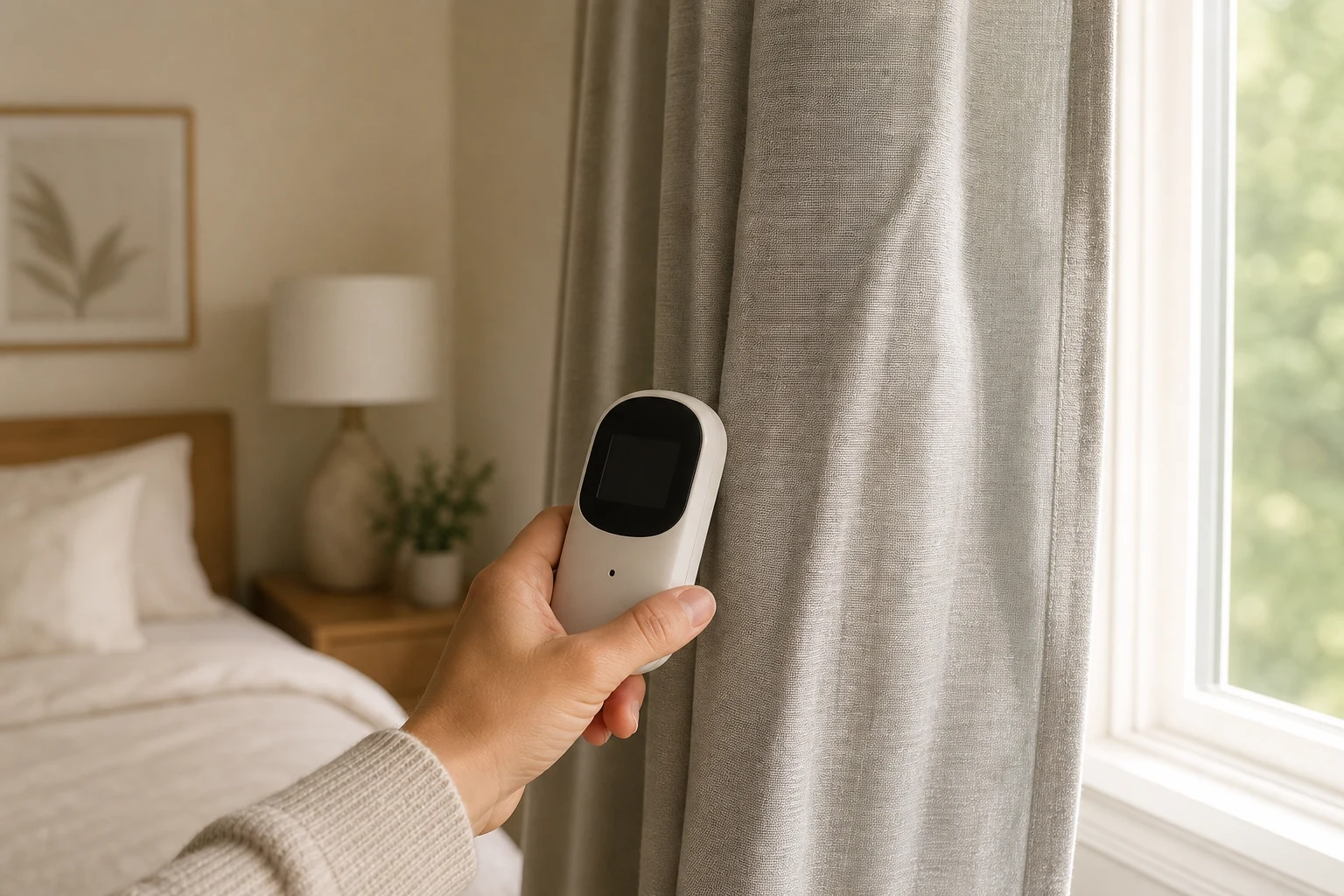
A note on claims: lab attenuation figures are usually measured on complete, ideal material samples at specific frequencies. They are honest numbers, but they are material numbers, not room numbers. Your room’s number comes from your room.
What should you do before buying anything?
If you are considering shielding paint or fabric, this order of operations protects both your wallet and your results.
1. Identify the actual source first
Find out what is actually elevated, at which frequencies, from which direction, at which times of day. RF from an external source justifies different action than a magnetic field from interior wiring.
2. Try distance and source control before materials
Turn off or relocate your own transmitters, hardwire what can be wired, and increase distance from sources you control. These steps are free and reversible, and they frequently change readings more than a partial shielding job. Our guide to reducing EMF exposure without going off grid covers the sequence.
3. Get a baseline measurement
Record levels at the bed, the desk, and other long-use locations before anything changes. A consumer meter can give useful directional hints, and our post on choosing a starter EMF meter explains what home instruments can and cannot tell you.
4. Plan the full enclosure question honestly
Map every path between the source and the space: walls, windows, doors, ceiling, floor. Decide what the complete project actually requires, then decide whether the complete project is worth doing. A partial plan should come with partial expectations.
5. Follow the manufacturer’s installation and grounding instructions
For paint, that means surface preparation, the specified number of coats, the grounding kit, and a qualified electrician for the earth connection. For fabric, it means full coverage, managed seams and edges, and keeping transmitting devices out of the shielded zone. If you are still choosing where to buy, the suppliers on our products page publish real attenuation data and carry the grounding kits their paints require.
6. Re-measure after the change
Same locations, same instrument, same general conditions. The after-reading is the verdict. Keep it specific: improved, unchanged, or worse, and by how much.
When does professional measurement help?
You can do a lot of this yourself. A professional assessment earns its fee in the situations where guessing gets expensive:
- Readings are elevated and you are not sure whether the source is RF, magnetic, or electric.
- The suspected source is outside your control, such as a cell site, a neighbor’s equipment, or utility infrastructure.
- You are pricing a shielding project and want to know whether it can work before you commit to paint, fabric, film, and an electrician.
- You installed shielding and the numbers did not move, or moved the wrong way.
- You want a room-by-room plan that puts cheap fixes first and materials last.
EMF Guru provides measurement-first consultations for homes and workspaces in the greater Portland area. We identify the actual sources, test whether shielding is even the right category of fix, and if it is, we give you the before-and-after numbers that tell you whether it worked. Start with the EMF testing in Portland overview or schedule a consultation.
Frequently asked questions about EMF shielding paints and fabrics
Does EMF shielding paint need to be grounded?
Follow the manufacturer’s instructions, which for conductive shielding paints typically require connecting the coated surface to the building’s ground using the product’s grounding hardware, installed by a qualified electrician. Grounding matters for AC electric field behavior and for electrical safety. An ungrounded conductive layer near household wiring can raise electric field readings near the wall.
Do shielding paints and fabrics block magnetic fields?
Not meaningfully. Standard conductive paints and fabrics are radio frequency tools. The low frequency AC magnetic fields produced by building wiring, panels, and appliances pass through them largely unaffected. Magnetic field problems call for distance, wiring investigation, or specialized approaches, starting with finding the cause.
Can shielding make my exposure worse?
In some setups, yes. Conductive surfaces reflect RF, so shielding a room that contains active transmitters can bounce their signal back into the space. Wireless devices inside a shielded area can also increase their transmit power while struggling to hold a connection. And ungrounded conductive paint can raise electric field levels near the wall. Measurement before and after catches all three.
How much RF do shielding paints and fabrics block?
Reputable products publish lab attenuation data measured on ideal, complete material samples at specific frequencies, and those figures are often high. Real rooms deliver less because of windows, doors, gaps, seams, and uncovered paths. There is no honest universal number. The reduction you get is the one you measure in your own room after installation.
Should I shield my whole bedroom or house?
Usually not as a first move. Most households get more benefit, at far lower cost, from source control: relocating or hardwiring their own devices, adjusting layouts, and turning transmitters off at night. Shielding is worth considering when a meaningful external source remains after those steps and the full coverage path can realistically be addressed. Measure first, then decide.
The bottom line on shielding paints and fabrics.
Shielding paints and fabrics are legitimate tools with a specific job: reducing radio frequency levels from sources you cannot turn off, in spaces you can realistically cover. Used that way, with proper installation, grounding, and verification, they can produce real, measurable improvements.
Used as a guess, they become expensive paint and curtains.
The sequence that works is boring and reliable: identify the source, do the free fixes first, get a baseline, plan honest coverage, install to the manufacturer’s spec, and measure again. If a product cannot survive a before-and-after reading, it did not deserve your money. If it can, you will know exactly what you bought.