
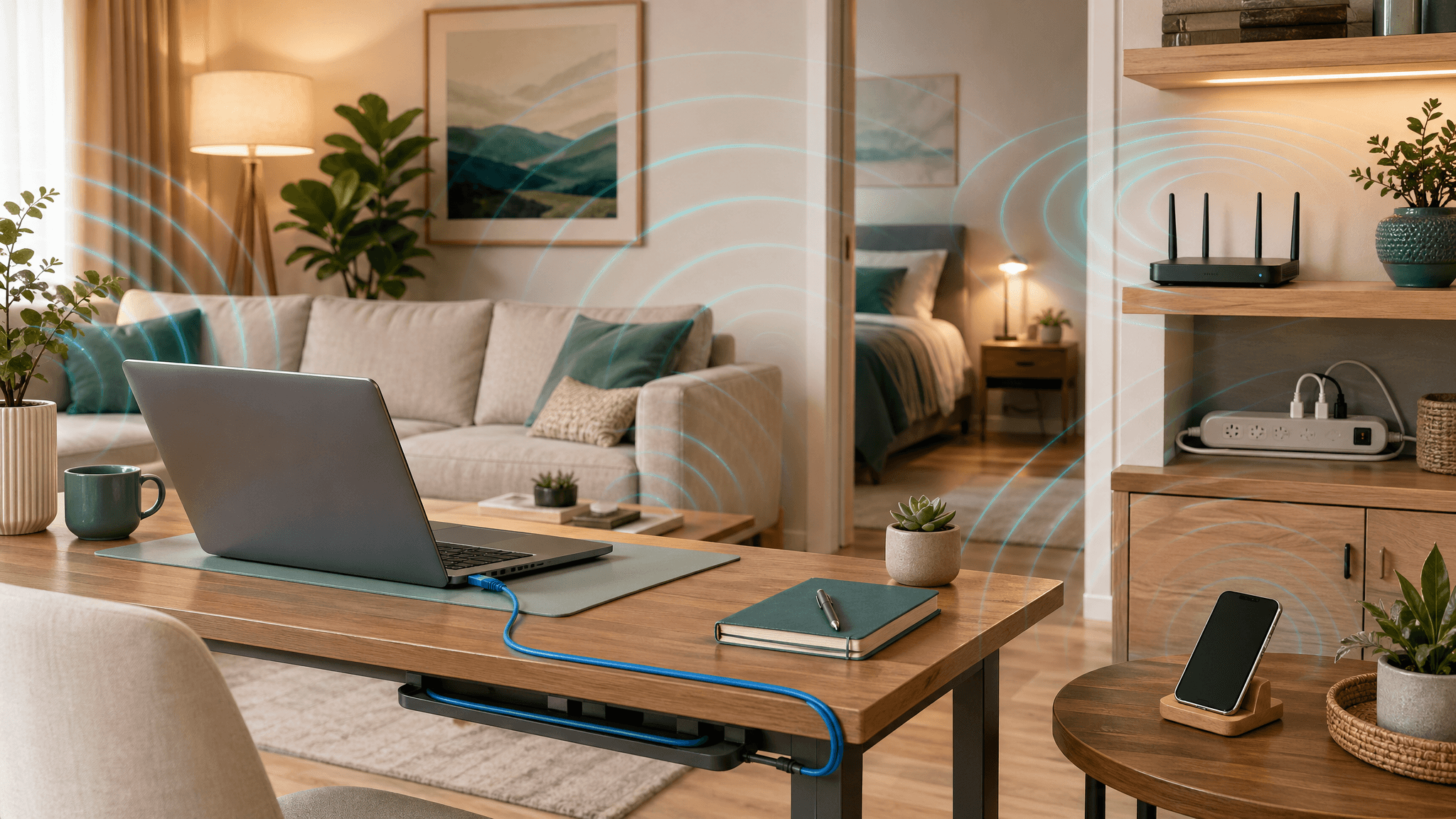
Lowering EMF exposure does not have to mean rejecting modern life. For many homes, the best approach is practical: keep the technology that is useful, reduce unnecessary close-range sources, and use measurement to decide what deserves attention.
The goal is not perfection. The goal is a calmer, better-informed home environment. Small changes often make more sense than dramatic purchases, especially when they are targeted to the rooms and habits that matter most.
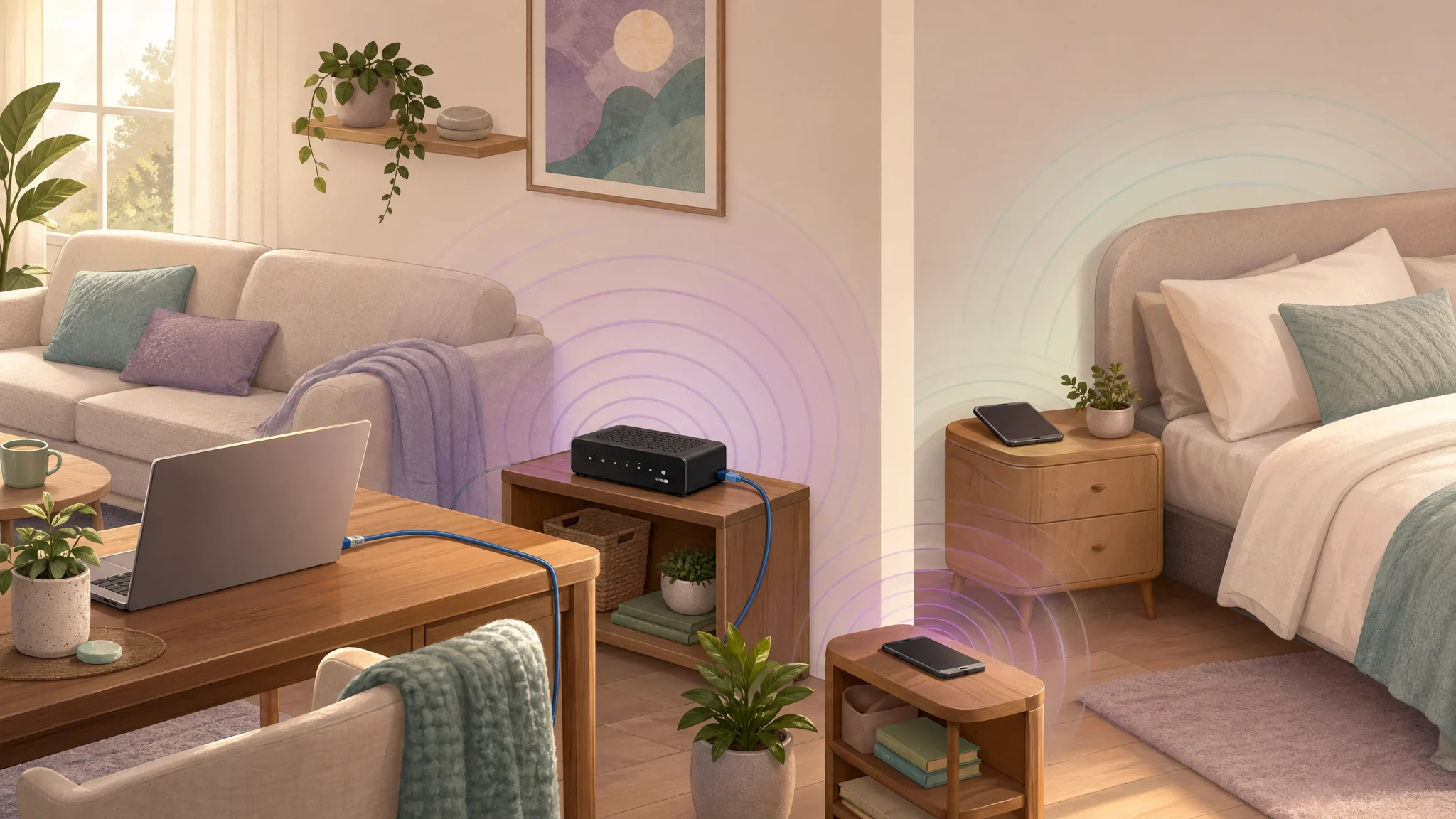
Start with distance.
Distance is the simplest exposure-reduction tool. Many EMF sources drop off with distance, especially close to the source. That means small placement changes can matter: move a charger off the nightstand, place a router farther from a bed, keep a laptop power supply away from your legs, or route cords away from a pillow area.
A good placement change is also low-maintenance. Once a router, charger, power supply, or cord is moved to a better location, you do not have to think about it every day. The reduction comes from the setup itself, not from remembering to use a special product or follow a complicated routine.
Use timing.
Some devices are useful during the day but unnecessary overnight. Timing can reduce avoidable exposure without changing how the home functions when people need technology. Examples include turning off Wi-Fi at night if no one needs it, charging phones away from the bed, disabling unused Bluetooth features, or unplugging a workstation power strip after work.
Timing should fit the household. If someone relies on Wi-Fi for work, safety devices, or communication, the answer may be placement and wired options rather than a strict shutoff. Practical plans are the ones people can actually follow.
Choose wired options selectively.
Wired connections are still useful. Ethernet for a desktop computer, TV, game console, printer, or streaming device can improve reliability and reduce wireless activity from fixed equipment. A wired keyboard, mouse, or headset may also reduce unnecessary Bluetooth use at a workstation.
You do not need to wire everything. Start with devices that do not move and are used for long periods. A home office and media center are often better candidates than a phone or tablet that needs mobility.
Prioritize bedrooms and work areas.
High-use spaces deserve the first review. Bedrooms matter because people spend long, repeated hours there. Home offices matter because people may sit near electronics all day. Nurseries, favorite chairs, and therapy or recovery areas may also be worth checking.
In those spaces, look for nearby routers, mesh nodes, chargers, power strips, lamp cords, adjustable beds, smart speakers, baby monitors, panels, meters, and shared walls. You do not need to panic about each item. You simply need to decide which sources are close, constant, and easy to improve.
Be careful with product-first solutions.
Many EMF products are marketed with broad promises. Some mitigation tools can be useful in the right context, but products should follow measurement, not replace it. A shielding fabric does not solve every RF problem. A plug-in filter does not solve every wiring issue. A sticker or pendant should not be treated as a substitute for identifying measurable sources.
Before buying, ask four questions: What field type is this product supposed to address? Where was that field measured? How will we verify that the reading changed? Could a simpler change solve the same issue?
A practical first-week plan.
- Walk the high-use rooms. Note beds, desks, favorite chairs, and the devices nearby.
- Move obvious close-range sources. Chargers, power strips, routers, and mesh nodes are good first candidates.
- Wire one fixed device. Try Ethernet for a desktop, TV, or media box if it is convenient.
- Review nighttime habits. Decide whether phones, tablets, routers, or smart speakers need to be active near sleep areas.
- Measure before major purchases. If the concern remains unclear, get readings before investing in mitigation.
Use measurement to avoid over-correction.
Measurement can prevent both extremes: ignoring a real source and overhauling a home based on guesses. It can show when a simple change helped, when a concern is not the main priority, or when an electrician or network adjustment would be more useful than consumer products.
If you want a deeper explanation of why testing matters, read EMF Testing vs Guessing. For help building a measured plan, see EMF Guru consulting.
What not to do first.
Do not begin with the most expensive or dramatic option. Shielding paint, canopies, filters, and major electrical changes may have a place, but they should follow measurement and source identification. A simple router move or cord change may address the actual concern with less disruption.
Also avoid changing too many variables at once. If you unplug ten things and a reading changes, you may not know which source mattered. A measured approach changes one likely source at a time, then checks the result.
Keep the home usable.
The best EMF plan is one people can live with. If a recommendation makes work, school, communication, or accessibility harder, it may not last. Prioritize changes that are low-cost, low-maintenance, and easy to explain to everyone in the home.
Build a priority list, not a fear list.
A useful reduction plan separates “possible source” from “measured priority.” Many devices can create some measurable field. Far fewer are close, constant, and relevant to the places people spend the most time. Writing that distinction down helps keep the project manageable.
A simple priority list might include one bedroom change, one workstation change, and one network change. After those are complete, measure again before deciding what comes next.
It is also worth celebrating small improvements. If a router move, wired workstation, or cleaner bedside setup reduces an avoidable source, that is meaningful progress. EMF reduction does not have to be all-or-nothing to be useful.
Measured, repeatable improvements are more valuable than dramatic changes that no one can maintain.
Start small, verify, then decide whether anything else is worth doing.
Note: EMF Guru provides education and environmental measurement services, not medical diagnosis or treatment. If you have health concerns, work with a qualified healthcare professional. Measurements can help clarify environmental sources and practical exposure-reduction options.