
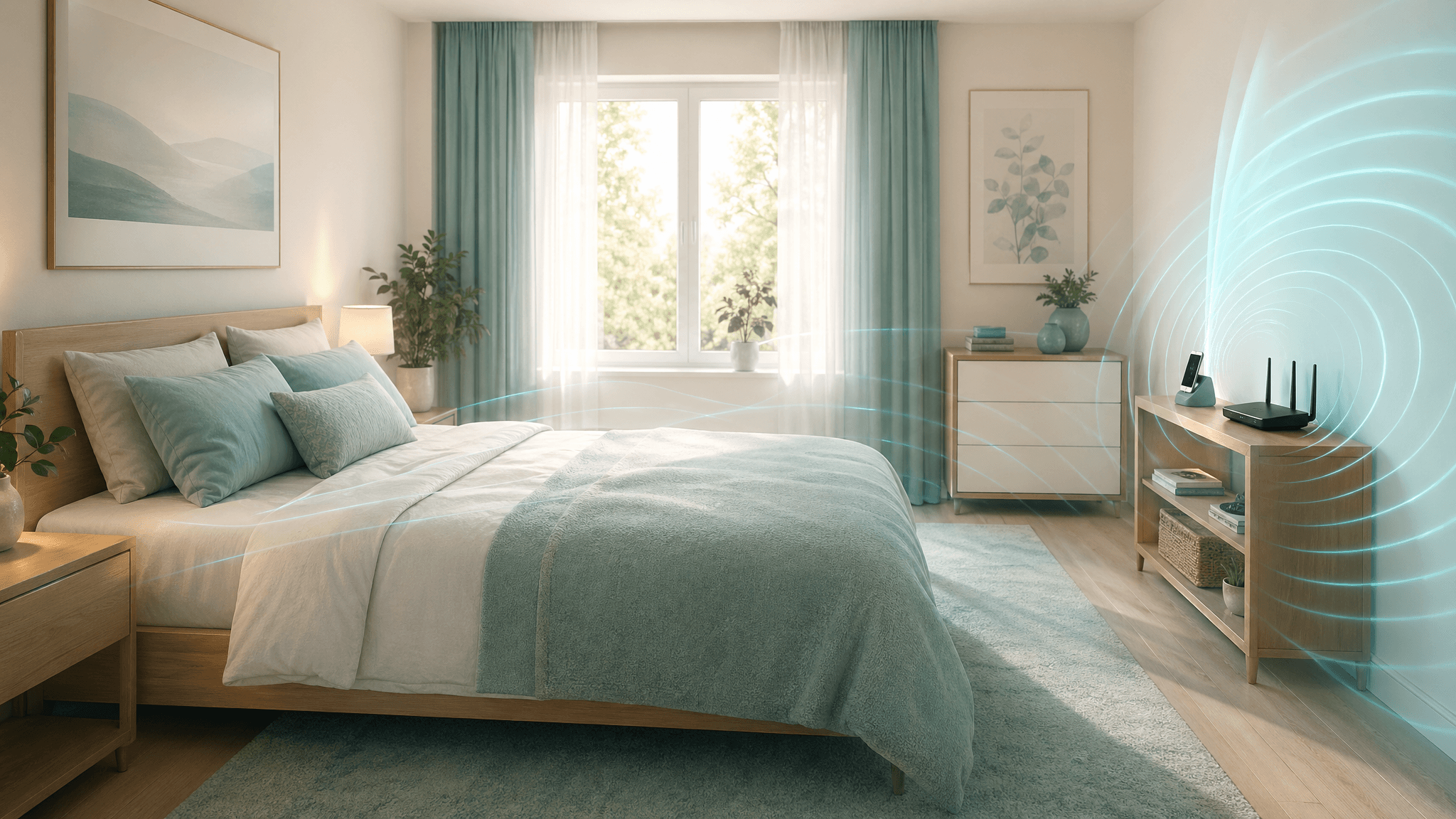
If you only check one area of a home first, the bedroom is usually the best place to start. That is not because bedrooms are automatically dangerous. It is because people spend long, repeated hours there, often in the same location each night.
A bedroom-first approach keeps EMF reduction practical. Instead of trying to evaluate every device in the house at once, you begin with the place where distance, duration, and nightly habits matter most.
Time matters.
EMF reduction is usually about priorities. A brief exposure near a device in the kitchen may matter less than a consistent source next to a bed, crib, or favorite sleeping position. Bedrooms also tend to collect chargers, lamps, alarm clocks, routers, baby monitors, adjustable beds, extension cords, and power strips.
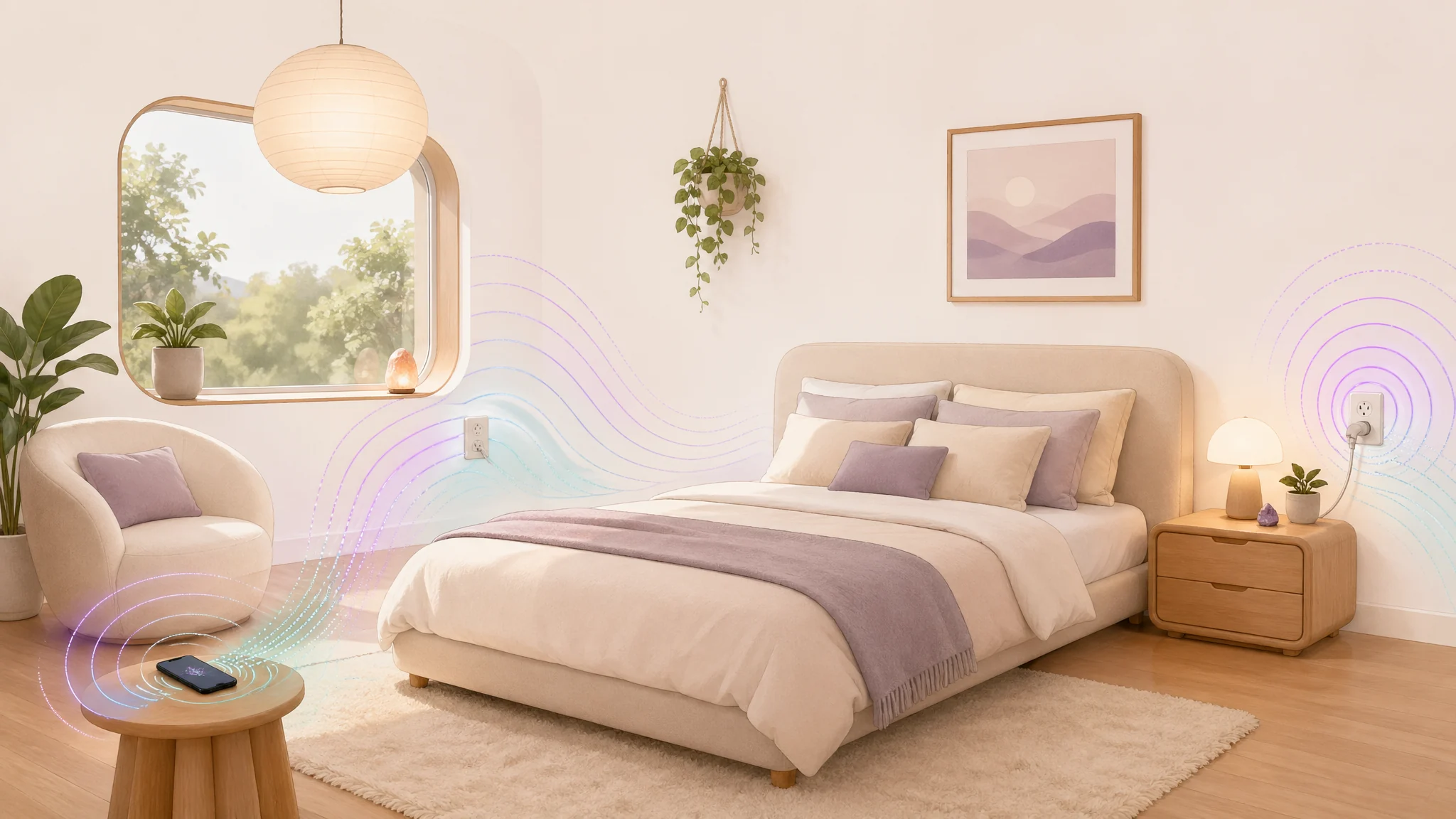
Common bedroom sources.
Bedroom readings can involve several field types. RF may come from nearby routers, phones, tablets, smart speakers, baby monitors, wireless security equipment, or smart meters outside a wall. Electric fields may come from wall wiring, lamp cords, power strips, chargers, or plugged-in devices near the bed. Magnetic fields may come from panels, service lines, wiring conditions, appliances, or equipment on the other side of a wall.
The most visible device is not always the main source. A phone on the nightstand may be easy to notice, but a panel behind a headboard wall or a wiring condition under load may require measurement to identify. That is why bedroom checks should combine practical habits with actual readings when the concern is not obvious.
Simple first steps.
- Move chargers, power strips, and plugged-in electronics away from the head of the bed.
- Keep phones off the pillow and out of the bed; use airplane mode at night when it fits your life.
- Place routers and mesh nodes outside sleeping areas when practical.
- Check what is on the other side of the wall behind the bed, including panels, meters, refrigerators, or office equipment.
- Avoid adding shielding or filters until you know which field type you are addressing.
These steps are not a substitute for measurement, but they are low-cost and easy to test. The key is to avoid turning the bedroom into a project based entirely on guesses.
What to measure in a bedroom.
A useful bedroom check includes the pillow area, both sides of the bed, outlets and cords near the bed, the wall behind the headboard, nearby wireless devices, adjacent rooms, and exterior walls. Readings should be taken where a person actually sleeps, not just in the center of the room.
It is also helpful to compare conditions with likely sources on and off. Does the RF level change when the router or mesh node is moved? Does the electric field change when a lamp is unplugged? Does a magnetic-field reading change when a nearby appliance cycles? Those comparisons are often more useful than one isolated number.
When to get help.
Measurement helps when a bedroom has a smart meter nearby, a breaker panel on an adjacent wall, a home office setup, a nursery concern, or an unexplained pattern that simple changes do not address. EMF Guru can help identify sources and create a practical priority list through consulting.
For broader reduction ideas, see How to Reduce EMF Exposure Without Going Off Grid.
Should everything be unplugged before bed?
Not necessarily. Start with the items closest to the sleeping position, especially chargers, power strips, wireless devices, and cords near the head of the bed. If a device is far away or needed for accessibility, safety, or comfort, measurement can help decide whether it is actually a priority.
Is a phone across the room enough?
Moving the phone away from the bed is often a useful first step. Airplane mode can reduce wireless activity when it is practical, but every household has different communication needs. The point is to reduce unnecessary close-range exposure without creating a routine people cannot maintain.
Keep changes boring and repeatable.
Bedroom EMF improvements should be boring enough to become routine. A phone charging across the room, a router outside the bedroom, and fewer cords near the pillow are easier to maintain than a complicated nightly checklist. If a simple habit lowers the relevant reading and does not disrupt sleep or safety needs, it is often the best first win.
One practical test is to make only one bedroom change at a time, then observe whether the measured condition changes. That prevents confusion and keeps the sleep area from becoming a collection of well-intended but unverified fixes.
That keeps the bedroom review measured, calm, and sustainable.
Note: EMF Guru provides education and environmental measurement services, not medical diagnosis or treatment. If you have health concerns, work with a qualified healthcare professional. Measurements can help clarify environmental sources and practical exposure-reduction options.