
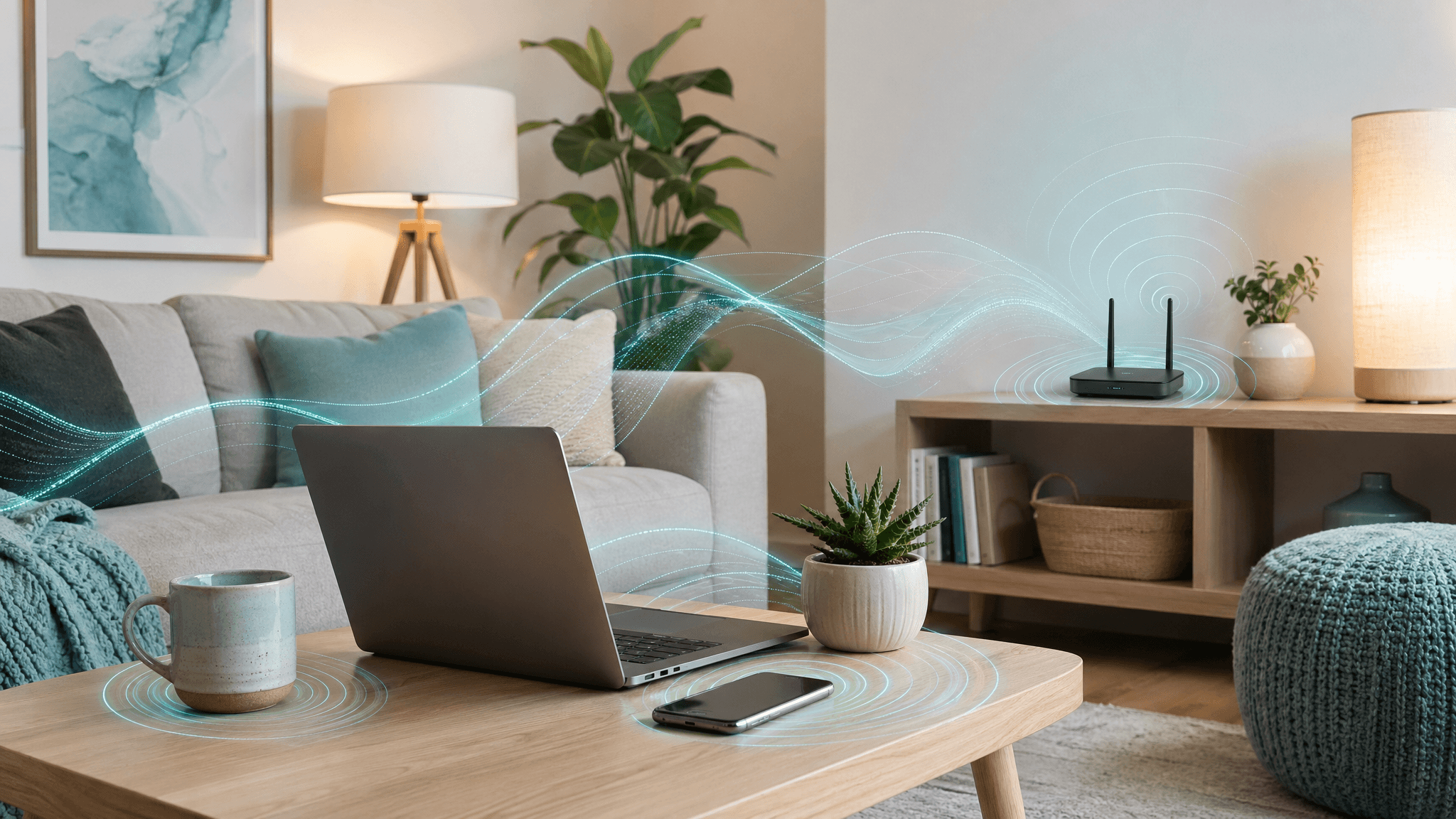
EMF stands for electromagnetic fields. The phrase sounds technical, but the basic idea is simple: electricity, wiring, appliances, radios, wireless devices, and natural sources can all create measurable fields in the spaces around us.
For homeowners, “EMF” is usually used as an umbrella term. That is useful shorthand, but it can also blur important differences. Radiofrequency signals from Wi-Fi are not the same as magnetic fields from current flow. Electric fields from energized wiring are not the same as high-frequency voltage noise on electrical circuits. A practical conversation starts by sorting the field type before deciding what, if anything, should change.
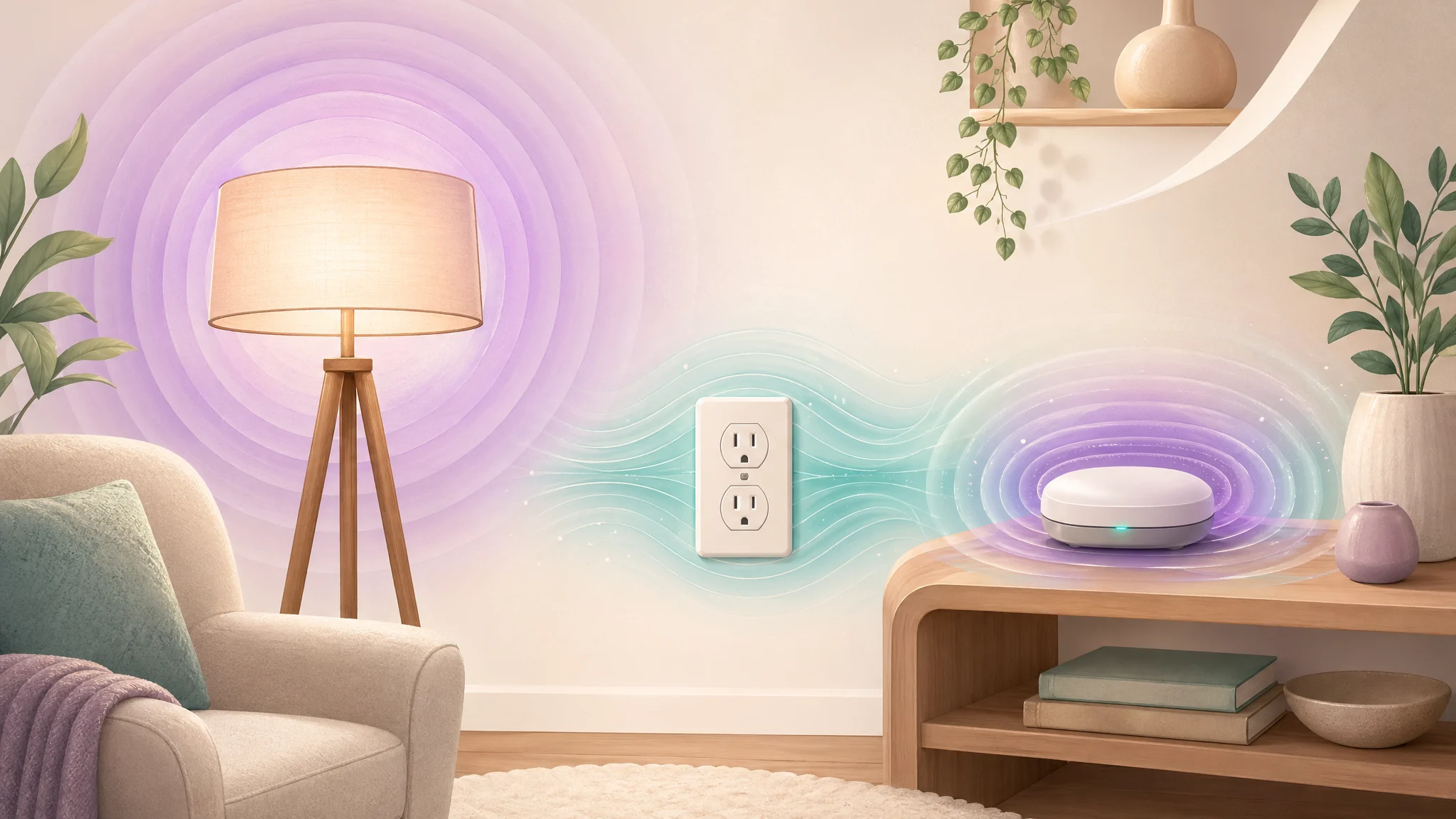
What EMF includes.
In home environments, EMF questions usually fall into four broad categories. Radiofrequency radiation, often shortened to RF, comes from wireless communication such as Wi-Fi, phones, Bluetooth devices, smart meters, and nearby antennas. AC electric fields are associated with voltage on energized wiring and plugged-in cords, even when a device is not drawing much current. AC magnetic fields are associated with current flow and can come from wiring, panels, transformers, motors, and some appliances. Dirty electricity is a common term for higher-frequency voltage transients riding on normal building wiring.
Those categories behave differently. RF generally drops with distance and is affected by walls, materials, antenna direction, and device behavior. Electric fields are strongly affected by proximity to wiring and cords. Magnetic fields can pass through many common building materials and may require source correction rather than surface shielding. Dirty electricity is evaluated on circuits, not simply by looking at one device.
Why EMF can feel confusing.
EMF conversations become confusing when people begin with a worry, a product, or a single visible device before identifying the field type. A Wi-Fi router, for example, is primarily an RF source. A lamp cord near a bed may be more relevant for electric fields. A wiring error, electrical panel, transformer, or appliance motor may be more relevant for magnetic fields. A dimmer switch, inverter, charger, or LED driver may contribute to wiring noise in some conditions.
That difference matters because each field type uses different units, different meters, and different reduction strategies. Moving a router farther away will not solve a magnetic-field issue from a circuit imbalance. A plug-in filter may not help if the main source is a nearby wireless device. Shielding material can create problems if it is applied without understanding what is being shielded, grounded, reflected, or rerouted.
A practical way to think about EMF at home.
Most homes contain many small sources. The goal is not to become afraid of every device. A better goal is to identify avoidable exposure sources, prioritize the rooms where people spend the most time, and make practical changes that fit normal life. Bedrooms, workstations, nurseries, favorite chairs, and homeschool or office setups are usually more useful to evaluate than a hallway someone passes through for a few seconds.
Distance is often the simplest tool. Moving chargers away from a bed, keeping a router out of a sleeping area, using wired connections for fixed devices, and turning off unused wireless features can help reduce unnecessary close-range exposure without making the home difficult to use. Timing can also help: a device that is useful during the day may not need to transmit next to a pillow all night.
Measurement keeps the discussion grounded.
Measurement is useful because EMF is not always visible or intuitive. The strongest source in a room may not be the newest gadget. It may be wiring behind a wall, equipment on the other side of a bedroom, a neighboring apartment’s router, or a utility source outside. Testing helps separate likely priorities from assumptions.
A good measurement process asks: What field type are we evaluating? Where do people spend time? What changes when a device is moved, turned off, unplugged, or replaced with a wired option? Did the reading change after the adjustment? That sequence is more reliable than buying products first and hoping they address the right issue.
Simple first steps.
- Identify the rooms where people spend the most uninterrupted time.
- Move wireless devices, chargers, and power strips away from beds when practical.
- Use Ethernet for stationary computers, media devices, or workstations where it is convenient.
- Avoid assuming one meter, one product, or one guideline answers every EMF question.
- Consider professional testing when the source is unclear, the concern is room-specific, or prior changes did not produce the expected result.
If you want more detail on the categories, see The Four Types of EMF We Measure in Homes. For a broader overview, visit About EMF or the EMF Resources page.
Is EMF always wireless?
No. Wireless signals are one category, but household EMF also includes electric fields from voltage, magnetic fields from current flow, and circuit-level noise. That is why the first step is identifying the category before choosing a response.
Can I reduce EMF without changing everything?
Usually, yes. Many useful first steps are simple: increase distance from always-on devices, move chargers away from beds, avoid placing routers in sleeping areas, and use wired connections for fixed equipment where convenient.
For beginners, the most important takeaway is that EMF work should be specific. Name the field type, identify the source, measure the place where people spend time, and choose the least disruptive change that can be verified.
Note: EMF Guru provides education and environmental measurement services, not medical diagnosis or treatment. If you have health concerns, work with a qualified healthcare professional. Measurements can help clarify environmental sources and practical exposure-reduction options.